Answers of capital importance: 5 insights about e-invoicing
From January 1, 2026, e-invoicing will become mandatory. From then on, every transaction with another Belgian company will be carried out via an electronic invoice. What are the advantages and disadvantages of this new obligation? How far are our companies less than a year from the deadline?
The answers to your capital questions
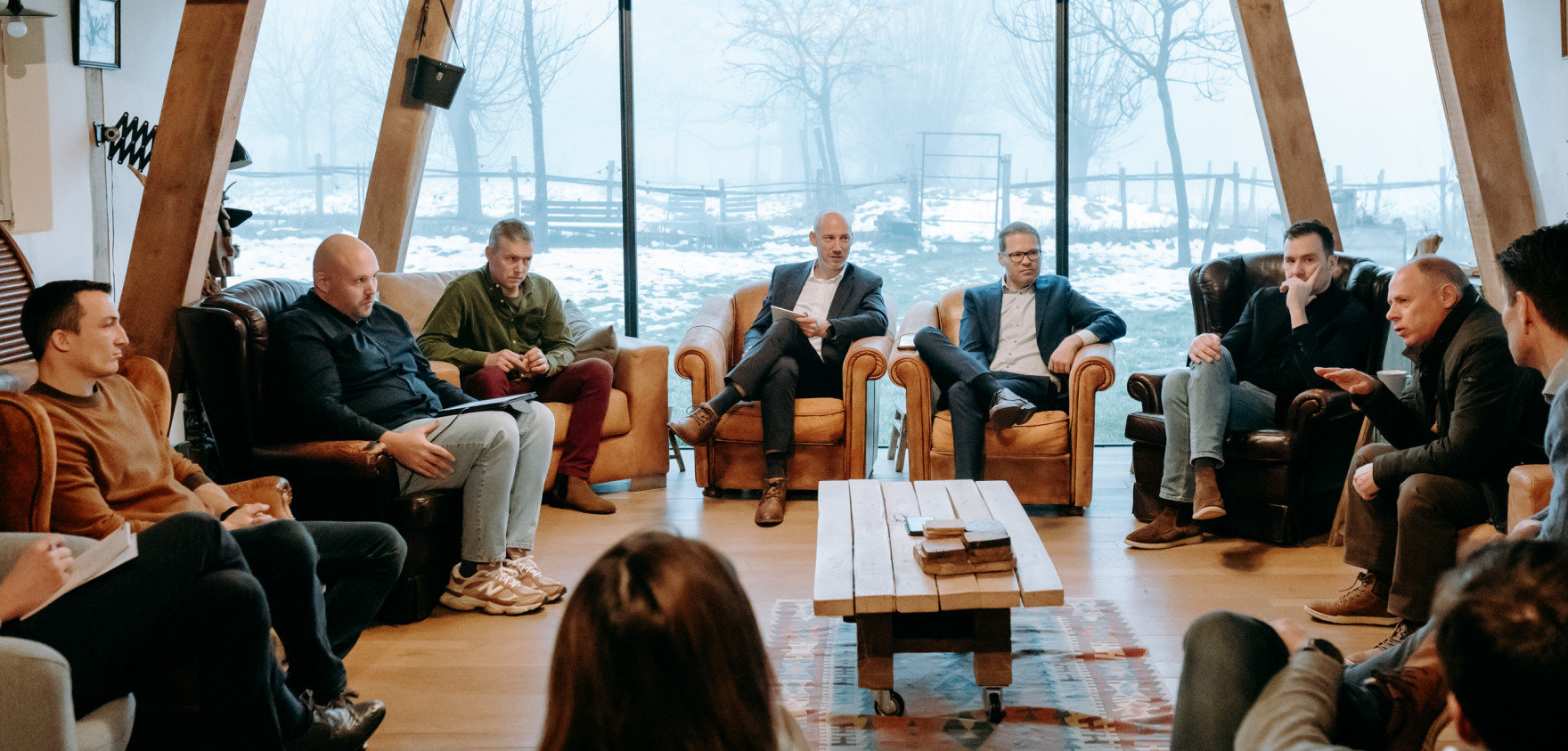
For Questions of Capital Importance our report with pressing issues for 2025, we received a lot of input from our business coaches. After all, they are fully immersed in the world of entrepreneurship. In this series, Answers of Capital Importance, we are once again listening attentively. We discuss the 12 most pressing questions with SBB customers. The goal? Learning from each other, with concrete examples from practice. This way we can help you even better in the future.
In January 2025, we sat down with a number of entrepreneurs for the first time to discuss how they deal with AI and e-invoicing in their business. In the field of e-invoicing, some surprising conclusions emerged.
1. Not everyone is ready for e-invoicing yet
Just two hands do not go up in response to the initial question: "Who is ready for e-invoicing?" Yet the hands quickly drop to about half when Digly manager and moderator Bert Callens explains exactly what e-invoicing is: an invoice in a structured electronic format that is sent from one software package to another and read in automatically. Invoices in PDF or Excel are therefore not covered by e-invoicing.
Not everyone has to be involved yet: today you can already create electronic invoices for public contracts from 3,000 euros. From January 1, 2026, e-invoicing will be mandatory for every transaction with another Belgian company – whether you buy or sell something. "For example, an entrepreneur at the table who almost exclusively serves B2C customers with his webshop will omit the integration for the time being."
2. The government is not (yet) watching
"I understood that in the future I will no longer have to file a VAT return. Everything is done electronically, so all data is known to the government?" That is not the case. "E-invoicing is something else than e-reporting," explains SBB expert Jesse Annendijck. "In principle, the government is not watching. You send your invoices directly to your customer via Peppol. The invoice data will therefore not first pass to the government. Apart from that, a VAT return always involves interpretation. So an automated VAT return is not for tomorrow."
3. No more lost invoices
The entrepreneurs at the table mainly see advantages in e-invoicing A primary advantage is that nothing gets lost anymore. "I often work from abroad. When everything becomes digital, you won't miss a thing."
"Because all invoices are centralized on one platform, we now have a direct link between purchase orders and invoices. In the past, a lot of manual work went into it. It will take some searching for the ideal platform for all our administration, because not every platform has equally smooth integrations."
2025 will be a transition year, the entrepreneurs emphasize. "Smaller suppliers in particular still often send invoices by mail. It will be easier if everything runs on the same platform. Now, I have to pay attention. But it already saves me a lot of time: I no longer have to search for invoices, we know that our invoices end up in the right place. What is not in the system no longer exists." Although that is nuanced: after all, the obligation only applies to Belgian entrepreneurs.
4. E-invoicing is faster than paper or PDF
There is another more direct advantage to e-invoicing: your figures are always up-to-date. "A large invoice that arrives late and is booked even later can pose dangers to your cash flow. With digital invoices, you are always up to date." Thanks to the structured format, everything is immediately processed automatically into your own system.
"Since we started working digitally, we no longer have to wait for lists of outstanding invoices. We just make it ourselves, using a Microsoft BI tool. That program has reduced our internal administration by about 75%."
5. E-invoicing is safer than email
An additional advantage of this e-invoicing for most attendees lies in ... safety. After all, several entrepreneurs have already encountered fraudulent invoices. Criminals hack into the mailbox of a supplier or the company itself and then falsify invoices. "An invoice was even intercepted once after we had sent them out, with a new account number pasted over ours. Of course, that causes very unpleasant discussions with customers: they have paid, but we have not received our money."
"In principle, the account numbers of our suppliers are in our system, but even then we often receive fraudulent e-mails with 'new account number'. Answering those emails to ask for confirmation makes no sense, because what if the email address has been hacked? I always call. Hopefully, this kind of nonsense will disappear with e-invoicing."
"From next year, invoices in your mailbox should be a thing of the past for B2B activities within Belgium," confirms Koen Braekers, business coach at SBB. "You can only join Peppol as a company and your data will also be checked. Essentially, this is 100% safe. But the advice remains: know your customer."
Curious about the advice of our SBB experts on e-invoicing?
Disclaimer:
The content of this blog has been automatically translated. While we strive to provide accurate translations, errors or inaccuracies may occur. SBB Accountants & Advisors is not responsible for any mistakes, omissions, or misunderstandings arising from the translation. For the most accurate information, please refer to the original version of the blog in Dutch.